

The Deepest Lunar Eclipse Until 2028
By Alan Dyer for SkySafari Premium (enjoy the free preview!)
Mark the night of August 27 on your calendar. Late that evening and into the post-midnight hours the Full Moon passes through Earth’s central shadow to turn a deep red color. This isn’t a total eclipse, but it’s close!
At mid-eclipse 93 percent of the Moon’s disk will be immersed in Earth’s dark umbral shadow, not 100 percent. So technically this is a partial eclipse, but a deep one.
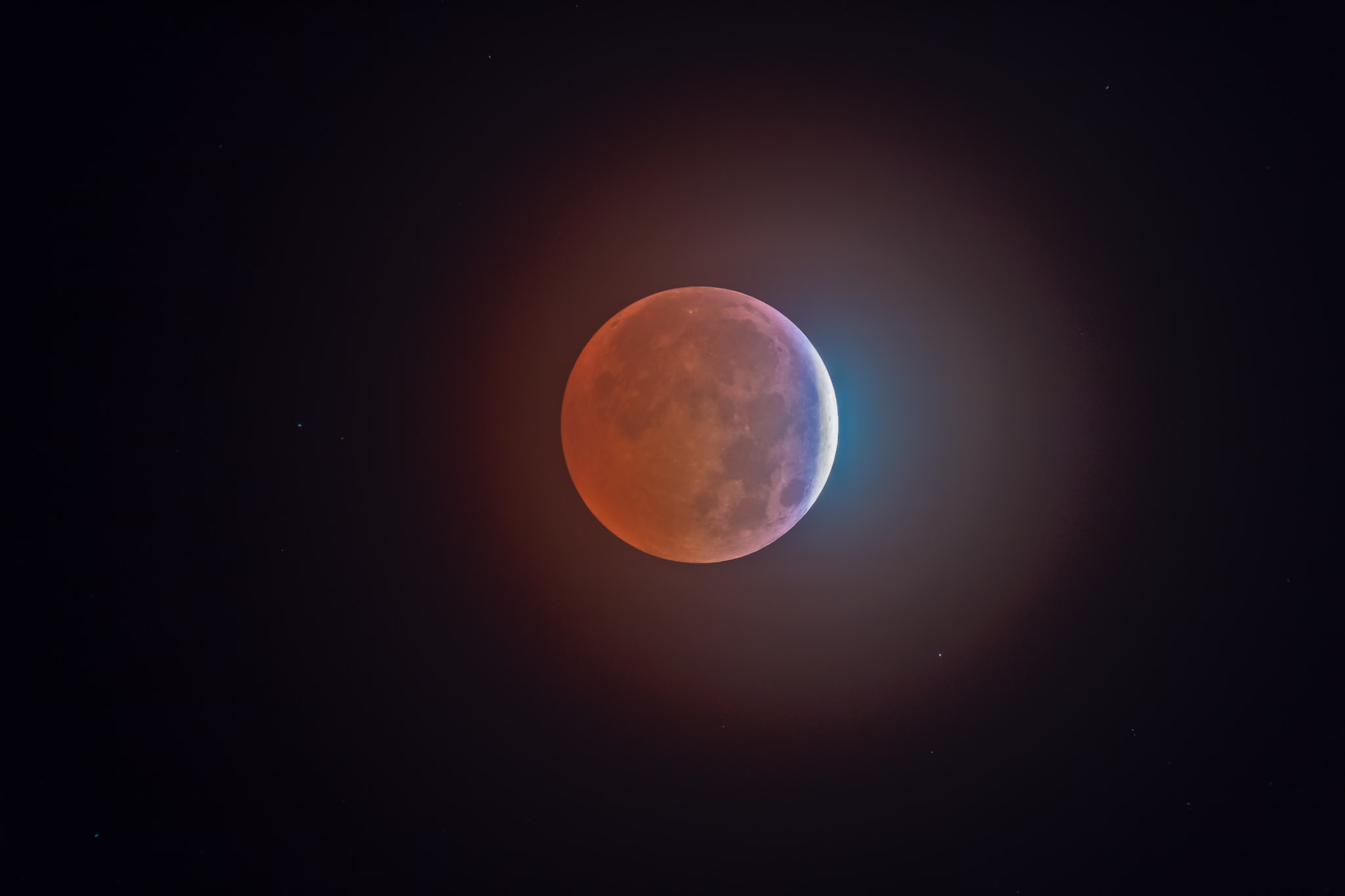
That remaining 7 percent of the Moon outside the umbra will appear like a white “polar cap” rimming the top, or northern area of the Moon, much like the image above from October 8, 2014.
As the image shows, look for subtle shades of blue along the boundary between the red umbra and white northern “cap” where the lunar disk is outside the umbral shadow. Those blue colors can come from sunlight filtering through the ozone layer in Earth’s upper atmosphere, and this will be good eclipse to catch them.
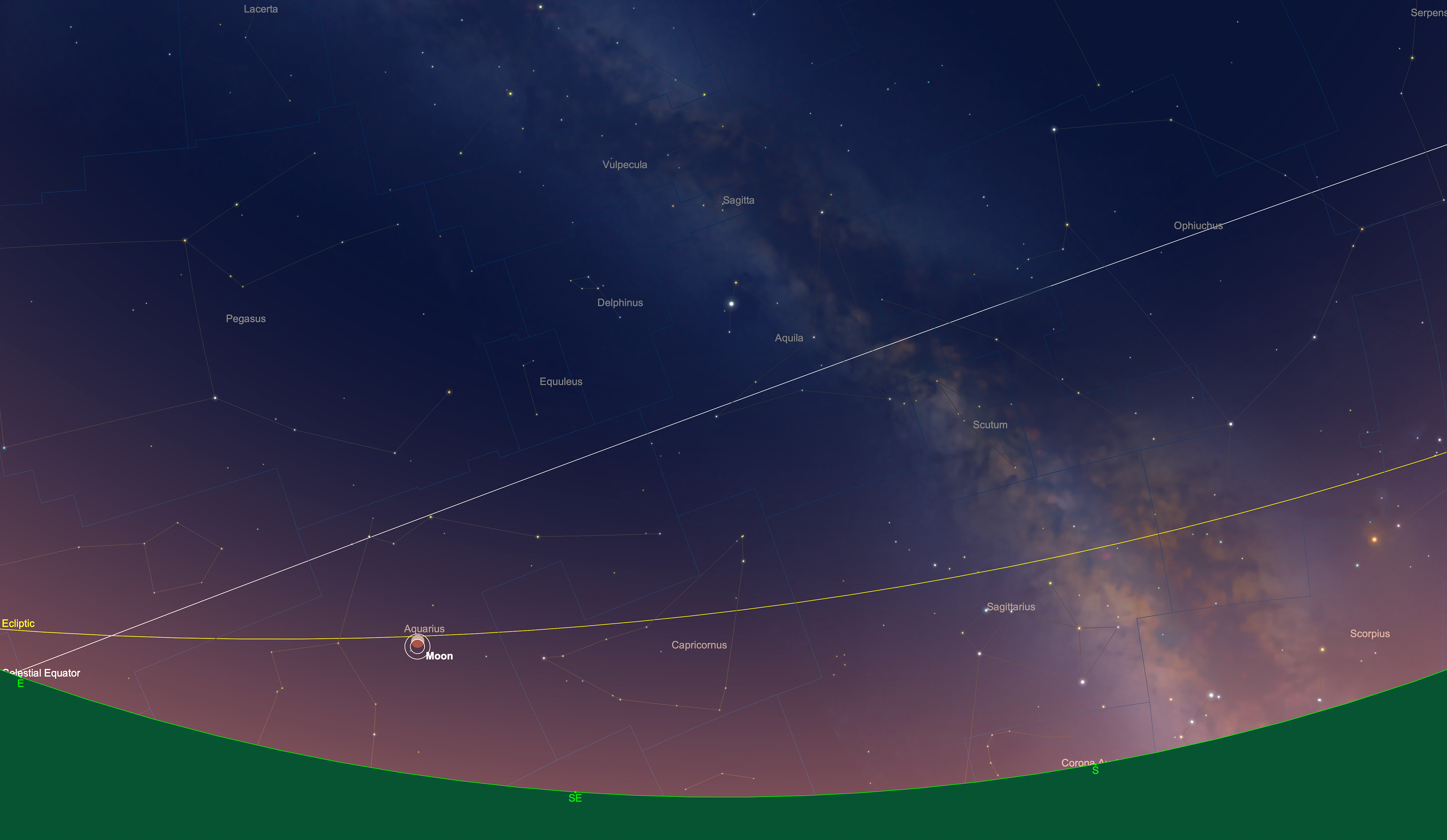
All of the Americas can see this eclipse beginning late on August 27. The farther west you are the earlier in the night the eclipse occurs, with those on the west coast seeing the Moon rise with the eclipse in progress.
With the Moon directly opposite the Sun, moonrise will be exactly at sunset. By mid-eclipse the Moon will be low in the southeast, as I show above for Vancouver, B.C.
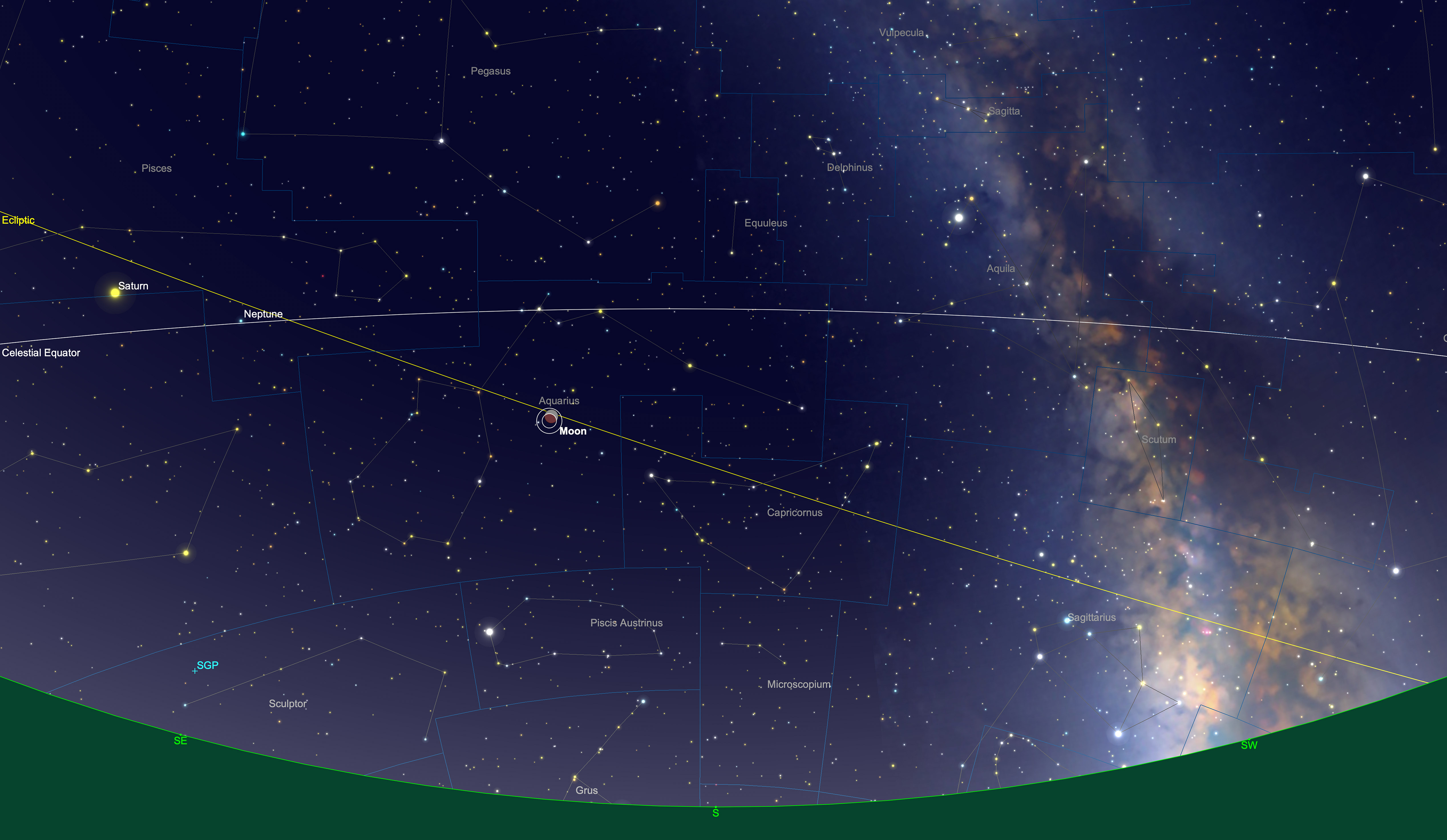
From eastern North America the Moon is higher in the south at mid-eclipse, as above for Toronto, Ontario. As the map below shows, western Europe also sees the eclipse, but with the Moon setting with the eclipse in progress at dawn on August 28.
For North American time zones, mid-eclipse is at: 9:14 p.m. PDT — that’s 10:14 p.m. MDT; 11:14 p.m. CDT; or 12:14 a.m. EDT on August 28. It is about this time the Moon will look reddest, lit by all the sunrises and sunsets going on around the world.
Unlike solar eclipses whose timing varies with your location, the times of lunar eclipses are the same for everyone, varying only by the hour due to your time-zone.
The partial eclipse begins when the Moon starts to enter the dark umbra at: 8:34 p.m. MDT (9:34 p.m. CDT; 10:34 p.m. EDT)
The Moon exits the umbra and the partial eclipse ends at: 11:53 p.m. MDT (10:53 p.m. PDT; 12:53 a.m. CDT; and 1:53 a.m. EDT)
So the umbral eclipse lasts a generous 3 hours and 19 minutes.
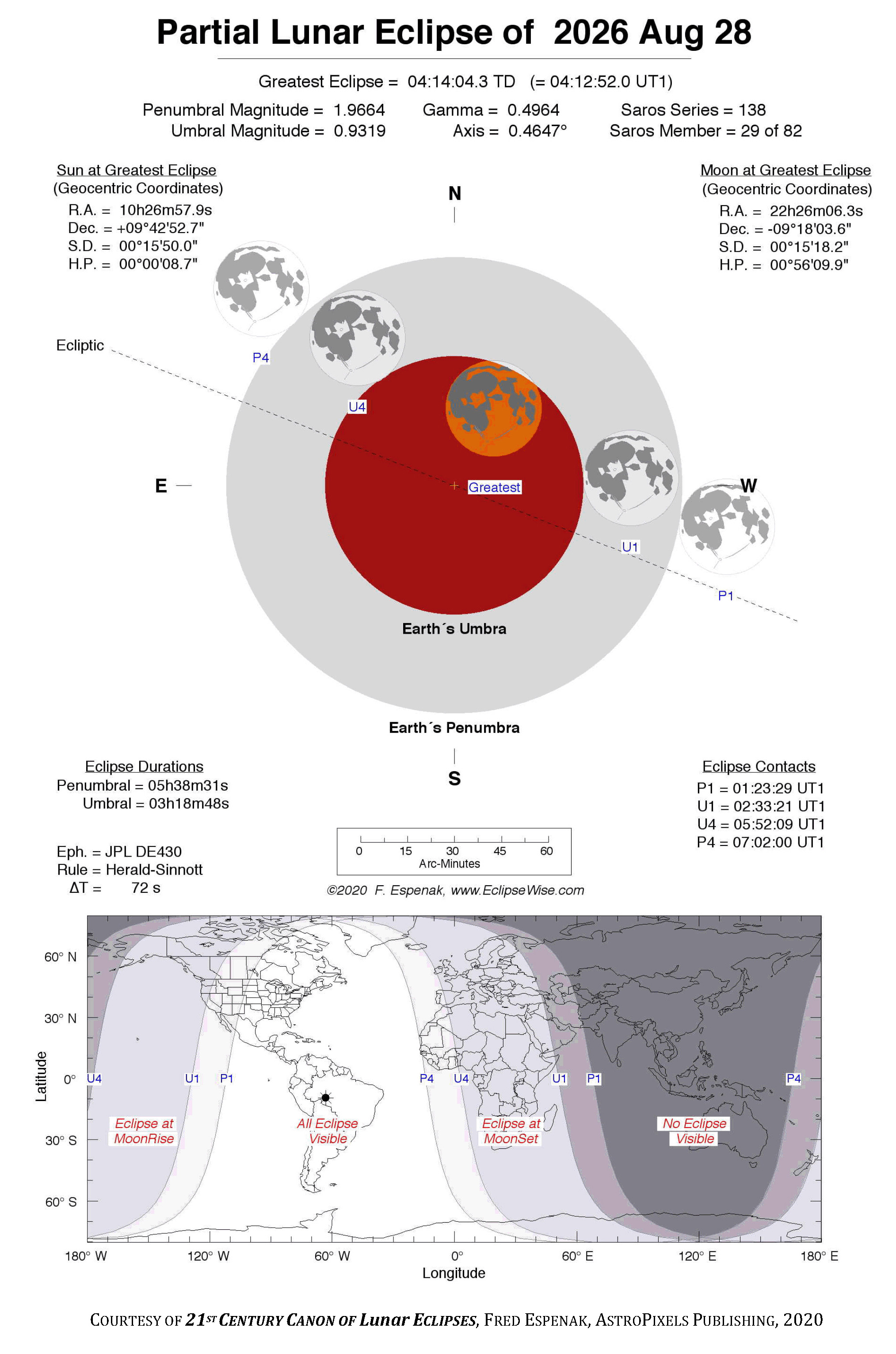
As the official diagram above shows, there is about 1 hour and 10 minutes on either side of the umbral eclipse when the Full Moon is in Earth's light outer penumbral shadow (the outer ring). But for most of that time you won’t see any darkening of the Moon’s disk, except just before the start of the umbral eclipse (marked U1 above) when the left edge of the Moon will appear a little darker.
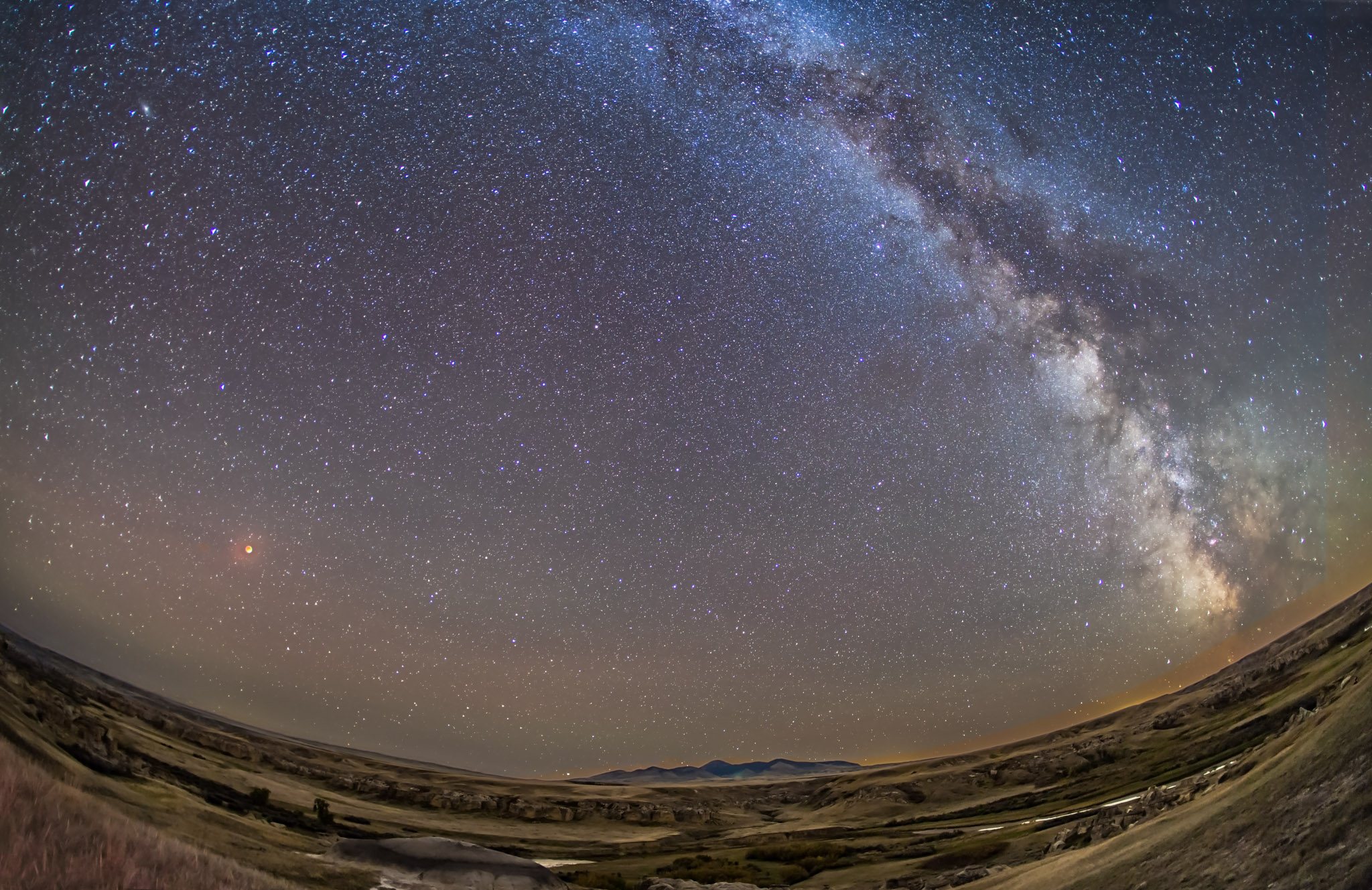
The Moon will be in the relatively star-poor constellation of Cetus, to the east of the summer Milky Way. But from a dark site, the Milky Way will become visible as the eclipse progresses and the Moon darkens, for a view similar to the one below I shot at the September 27, 2015 total lunar eclipse.
To preview the eclipse, click the link (in SkySafari app, Featured Story) to set SkySafari to the time of mid-eclipse.
Then scroll ahead and back in time to watch the progress of the Moon through Earth's shadow (marked by the concentric rings) from your location. For those in western North America the Moon might be below the horizon at the start of the eclipse.
Try to catch this lunar eclipse, even if it means chasing to clear skies. The next total lunar eclipse anywhere on Earth is not until New Year’s Eve, December 31, 2028, visible mostly from the eastern hemisphere.
So while not total, this month’s eclipse is almost as good and is the last we will see for a while!
12 comments
At least we Europeans got the Solar eclipse. But you are especially lucky because of those auroras
Unlike a solar eclipse, it’s perfectly safe to look directly at the Moon 🌝
After going to Spain to witness a magnificent solar eclipse, two weeks passed to see a lunar eclipse, it’s a kind of bonus! Thank you
Sarà più profonda come eclissi rispetto a quella precedente dell’anno scorso.
Bu kadar detaylı bilgi için çok teşekkür ederim.. Türkçe ye çevrilmiş olması ayriyeten çok mutlu etti..