

The Last Lunar Eclipse (For a While!)
By Alan Dyer for SkySafari Premium
We’ve been spoiled for lunar eclipses lately, with a pair of totals – on March 14 last year (when I took the opening image), and again on September 7, 2025.
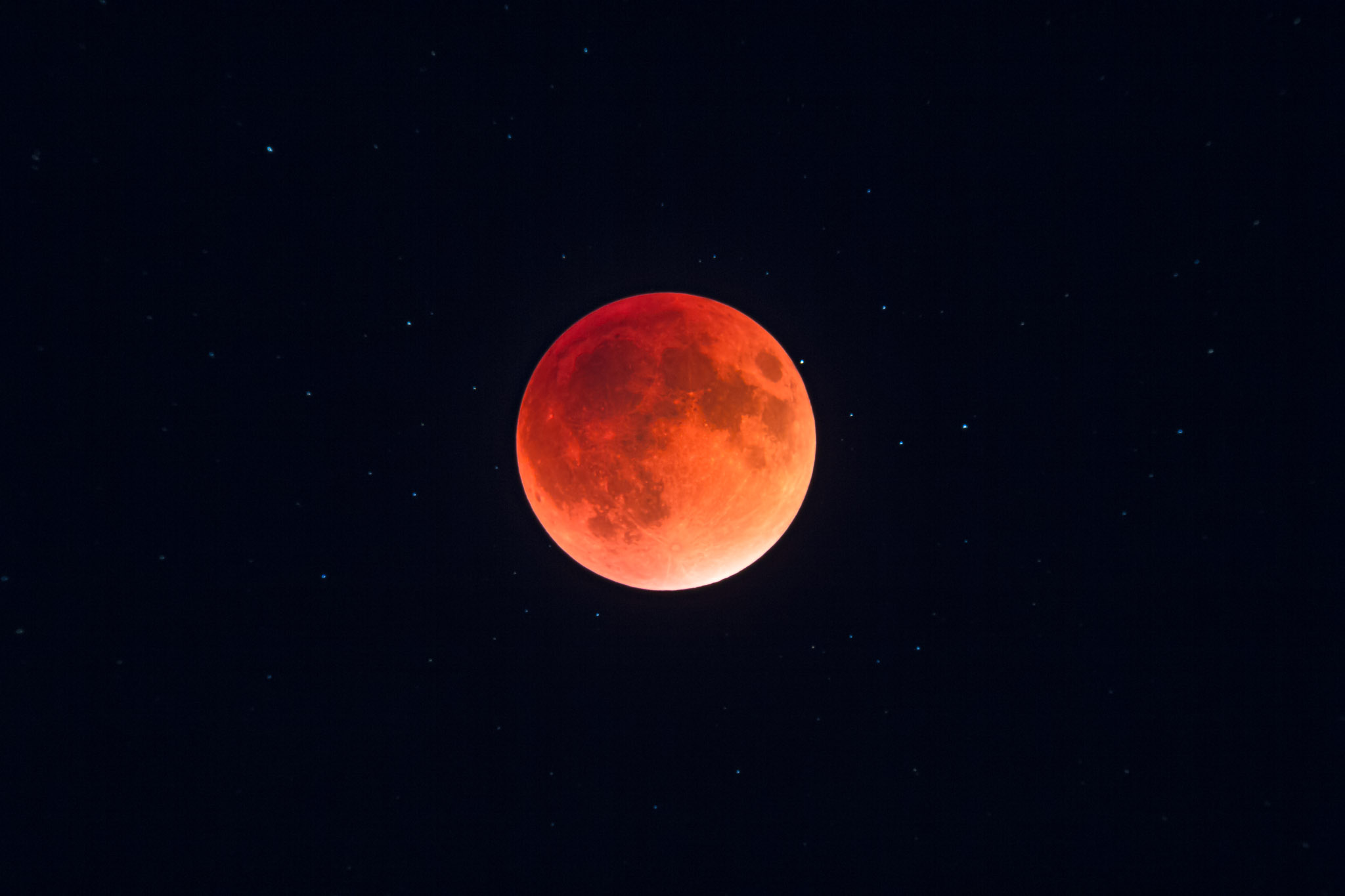
The western hemisphere saw the March eclipse while the eastern hemisphere saw September’s eclipse. Now, six lunar cycles later, on March 3, the half the world surrounding the Pacific sees the full Moon turn deep red again as it passes through our planet’s shadow. The red is from long wavelengths filtering and refracting through Earth’s atmosphere.
This is the last total eclipse of the Moon until December 31, 2028.
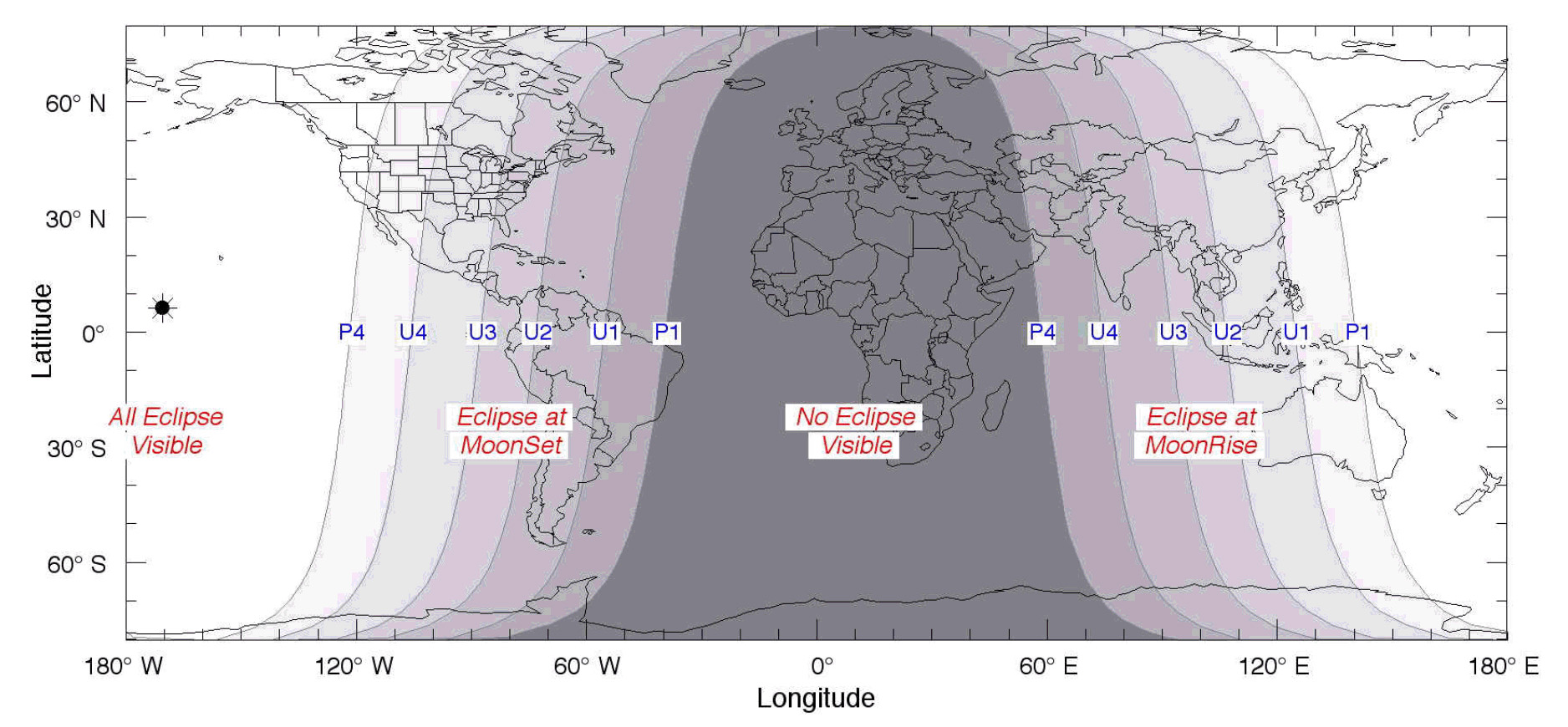
The map above, courtesy the late Fred Espenak’s website EclipseWise.com, shows who can see the March 3, 2026 eclipse.
In North America, the west is favoured where the entire length of the total eclipse and partial umbral phases are visible, though in the wee hours after midnight on the night of March 2/3, or in the pre-dawn hours of March 3 before sunrise.
For those in eastern North America the Moon sets at sunrise with some aspect of the eclipse in progress. The East Coast sees the Moon set during totality.
On the other side of the Pacific, in Japan and Australia for example, the eclipse occurs at or after moonrise in the early evening of March 3. Europe and Africa see nothing of this eclipse. Their eclipse was six months ago.
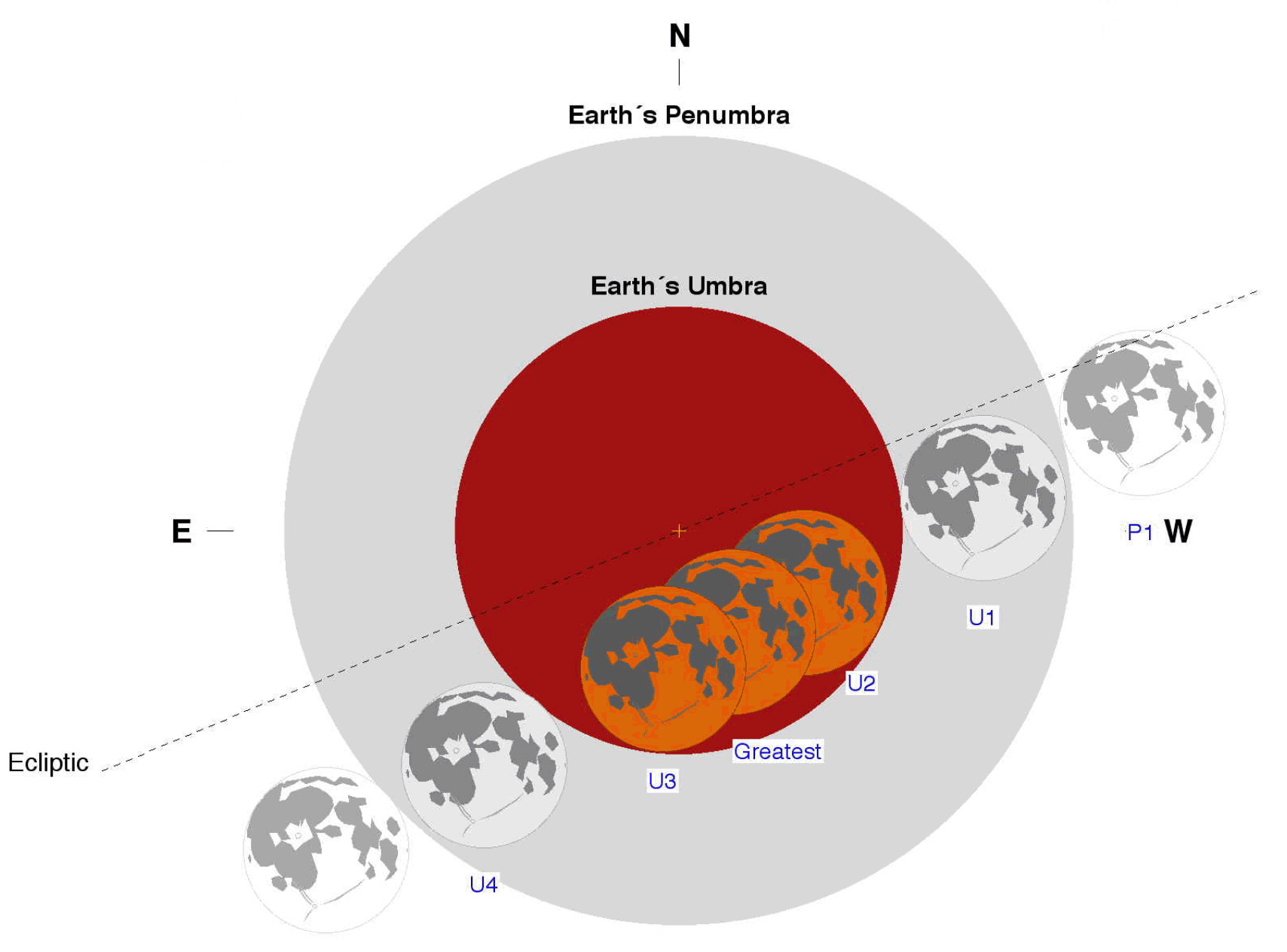
This diagram, also from EclipseWise.com, shows the progress of the March 3 eclipse. The partial eclipse, when the first dark bite of Earth’s umbral shadow appears on the Moon’s western edge, occurs at 09:49 UT (4:49 a.m. EST; 1:49 a.m. PST), labeled as U1 above.
After 75 minutes of an increasing partial eclipse, totality begins at U2, at 11:04 UT (6:04 a.m. EST; 3:04 a.m. PST). Totality lasts 59 minutes. We have an hour to enjoy a red Moon!
Totality ends at U3, at 12:03 UT (7:03 a.m. EST; 4:03 a.m. PST). However, for those on the east coast of North America the Moon will have set before this.
The Moon emerges from the umbra over a partial phase lasting another 74 minutes, until U4 at 13:17 UT (6:17 a.m. MST; 5:17 a.m. PST) when the eclipse is essentially over.
Click here to take SkySafari (in-app article) to the start of the partial umbral eclipse at your location. It might be below your horizon. The two circles are the boundaries of the inner dark umbra of Earth’s shadow, and the outer light penumbral shadow. Step ahead in time by the minute to see the eclipse progress.
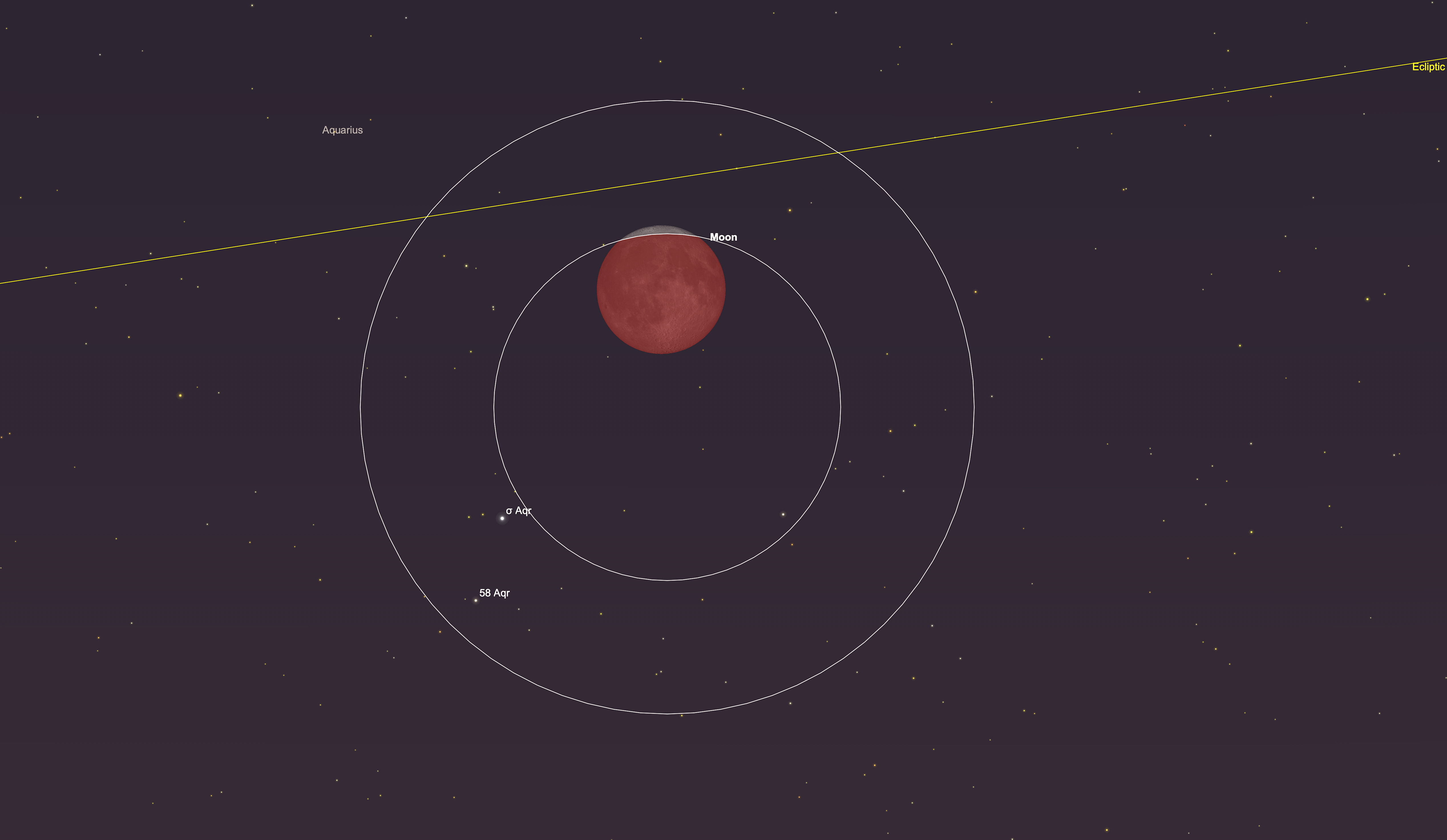
The next total eclipse of the Moon on December 31, 2028 is the first in another trio of totals at six-month intervals, until December 20, 2029.
However, the eclipse drought between now and 2028 isn’t quite so bad as it seems. On the night of August 27/28, 2026, six lunar cycles after the March 3 total, most of the western hemisphere can see the Moon almost totally eclipsed.
At maximum eclipse, as shown above, 93 percent of the full Moon’s disk will be immersed in the umbral shadow, enough to turn most of the Moon visibly red. So we do have another red Moon opportunity this year. Then none until New Year’s Eve 2028.
If you like content like this article, consider supporting astro authors like Alan by subscribing to SkySafari Premium within any V7 / V8 app or at LiveSky.com
1 comment
What can be learned about moon and earth from the eclipse event? Is the change in their relative distance from each other measurable? Is that change caused mainly by the sun?